Upskilling volunteers to take action for nature
Eva, our Community Conservation Officer, shares how rewarding it is to see communities coming together to take action for nature.
“I love seeing the community come together. Last year, the willow cuttings began a journey that connected several diverse groups - starting at Malham Tarn, where the new cohort of apprentices joined me during their induction week to take the cuttings.
"As you probably know, some willow species are native to the UK. Crack willow, Grey willow and Osier willow, are some that you might see more commonly around you. At Malham Tarn, the National Trust has given YDMT permission to take cuttings from some of the rarer species, Tea-leaved, Bay and Purple willow. Growing these cuttings into new plants enables us to increase the species diversity of our tree planting schemes.
"In turn, this will support a more diverse range of wildlife, provide a wider range of micronutrients and improve climate resilience.
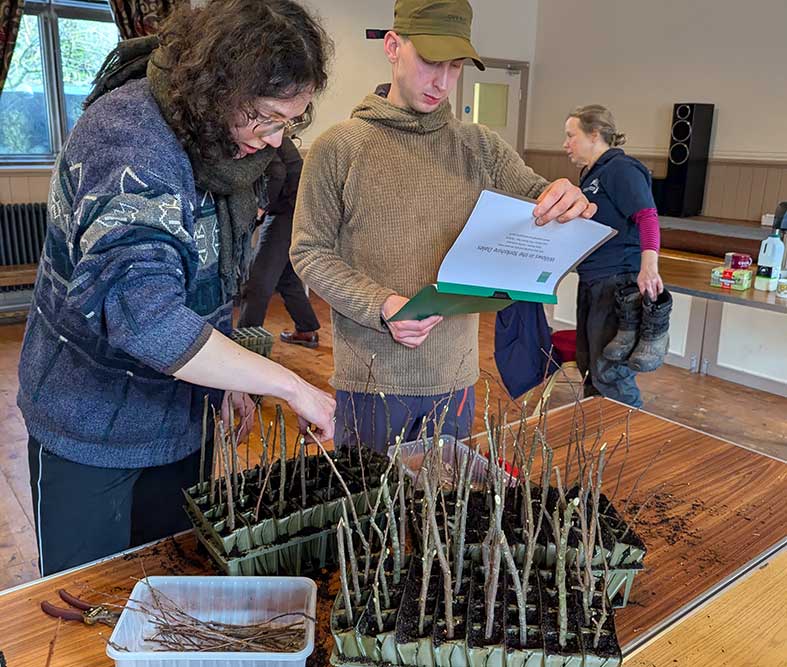
“Fast forward a few days and those willow cuttings were in the hands of community volunteers, including Malham Environment Group, who prepared them for planting.
"Once they’d been potted, the willows were transferred to the community tree nursery site at nearby Hanlith.
“The community group is now looking after those cuttings as they grow and develop roots over the year, regularly watering and weeding to give them the best chance of survival. Next winter, the saplings will be ready to plant out in the local landscape.
“It’s exciting to think about what will happen next. From that cutting taken by an apprentice, potted and cared for by the community, there will hopefully be a rarer species of willow growing somewhere in the Dales a year later.
“We’re now working on locating rarer willows in Swaledale with a view to taking cuttings this year. Of course, cuttings are only one way to grow rarer varieties. We’re hoping to grow more from seed, but there is just a brief window to collect willow seeds as they are dispersed so quickly. It’s important to use a variety of methods because, with a cutting, you get a clone of the parent tree.
"With a seed, you’re growing a genetically unique plant, especially as willows often hybridise."
Meadow surveying
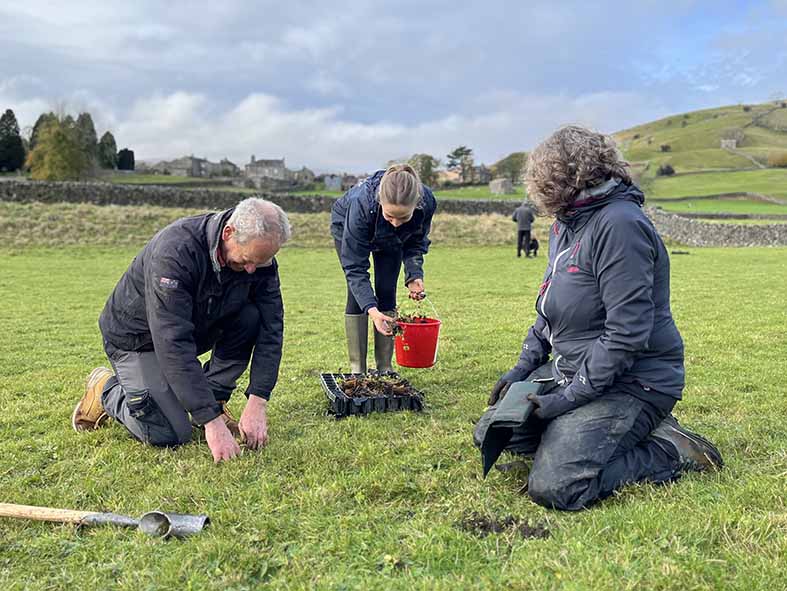
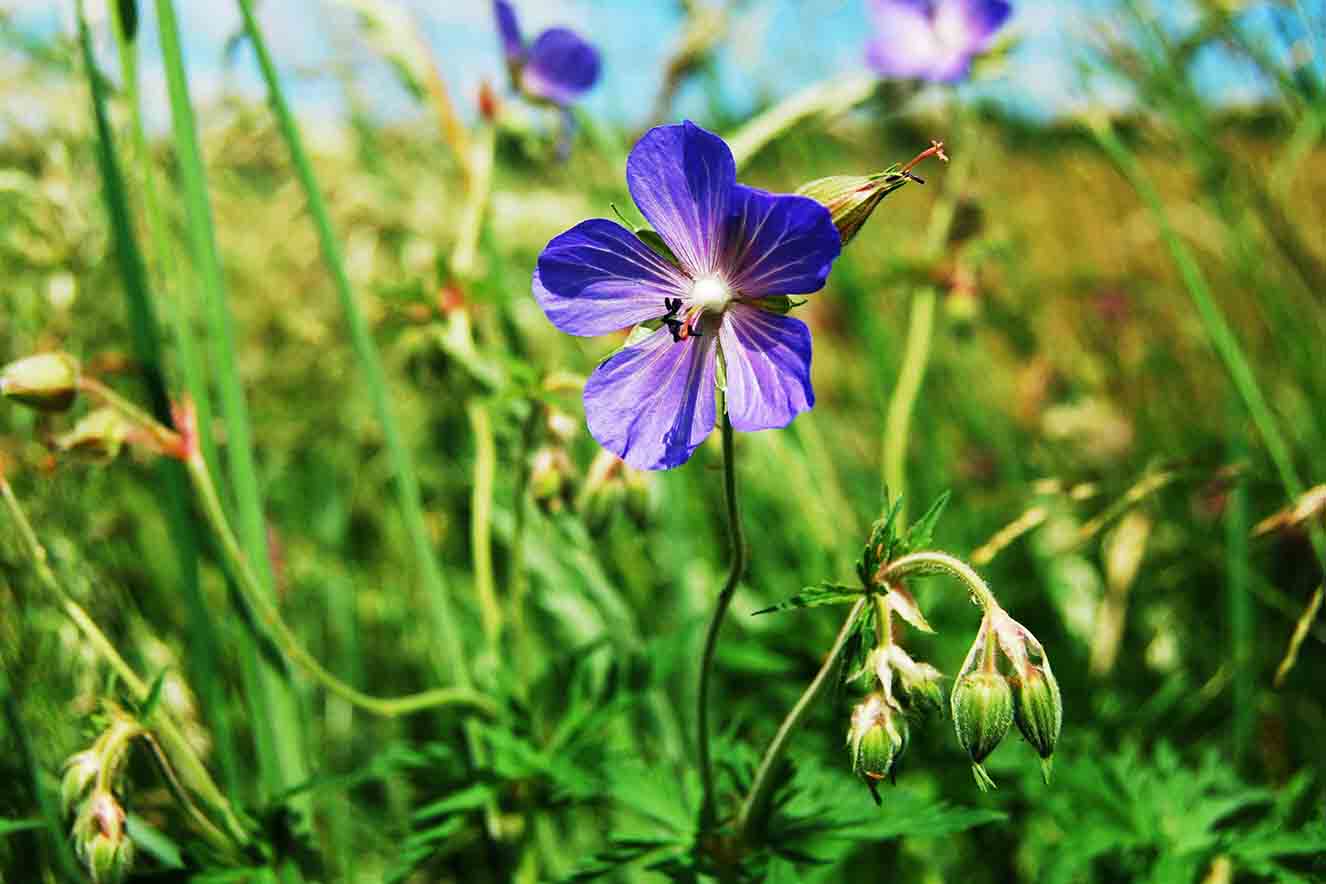
“We put lots of work into training volunteers and it’s lovely to see it come to fruition. In May last year, we trained groups of volunteers to identify meadow plants. A short time later, those volunteers went out to use their skills to survey sites. These included new locations as well as sites selected from the 850+ hectares of precious meadow habitat YDMT has created, restored and enhanced over the last 20 years.
“The survey took place in June and July when the plants were in flower and easier to identify, ahead of farmers taking a hay crop in August. The volunteers then sent back their findings, and we used that information to look at which sites to prioritise for enhancement that year. We will complete further analysis of the data our volunteers collected ahead of this year’s restoration work.
When autumn came round, volunteers were out again, planting native meadow plug plants and seeds.
“It’s a great way of showing how, with your help, we can provide the training, support and resources, but everything else – so much energy and enthusiasm – comes from the community.
“We’re always working to increase the skills of volunteers and, last year, that meant offering extra training in vegetative grass identification skills. This year, there will be a further six days of botanical ID training for both new volunteers and for those with more experience.
“From seed-gathering onwards, the local community will continue to play a vital role in enhancing and restoring our species rich wildflower meadows. Seeing it all come to life is the greatest reward of this job. There’s nothing better than looking out over a meadow in flower in summer and thinking: ‘we did this.’”